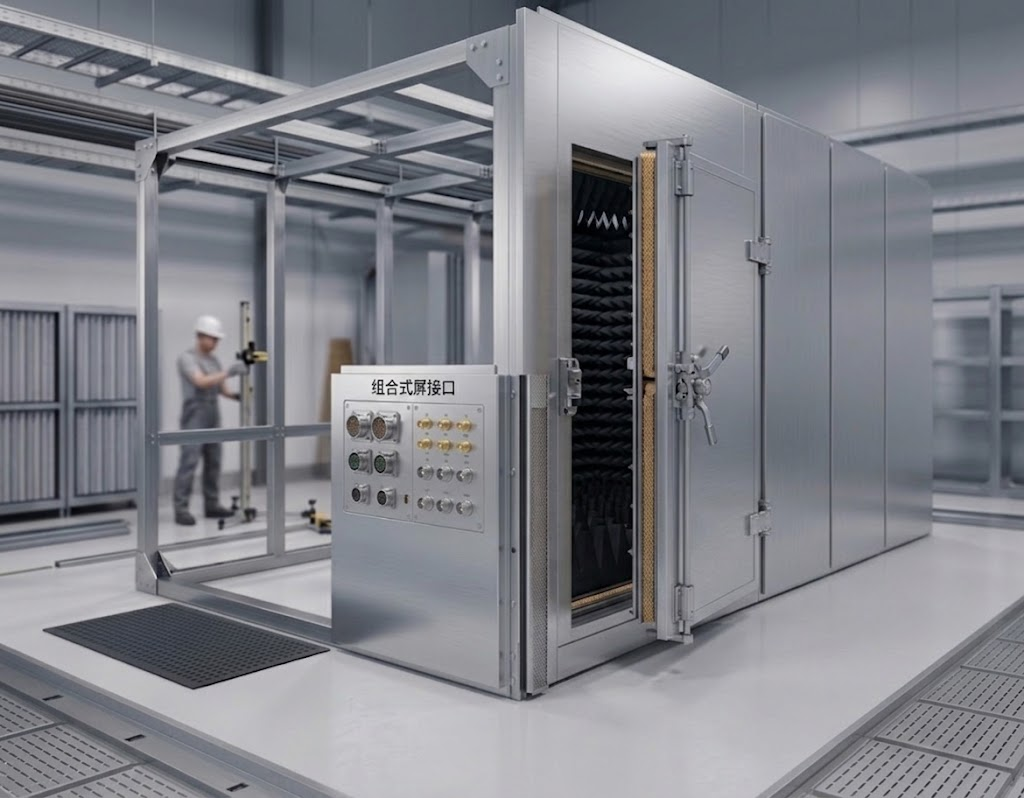
High-Precision Electromagnetic Shielded Rooms — Full-Cycle Custom Engineering

Engineered for third-party CNAS and GJB acceptance. Purpose-built for defense research, automotive EMC testing, medical shielding and wireless communication chambers, with shielding effectiveness up to >100 dB across the specified bands.

Request a Site Assessment and Turnkey Proposal

Built for Demanding Standards-Based Test Applications

EMC/EMI Chambers for Third-Party and In-House Certification

EMC/EMI Chambers for Third-Party and In-House Certification

Isolates public-network and radio interference to create a standard semi-anechoic (SAC) or fully anechoic (FAC) environment for engineering evaluation and product compliance testing.

  • Chambers for new-energy vehicles, automotive ECUs and radar sensors
  • EMS test environments for smart appliances and medical devices
  • Shielding projects for defense communication equipment tested to GJB 151B

Wireless R&D, High-Sensitivity Laboratories and Secure Facilities

Provides a near-zero background interference baseline for advanced wireless equipment while supporting secure-room requirements that prevent leakage of sensitive electromagnetic emissions.

  • Far-field and near-field chambers for 5G/6G and millimeter-wave base-station antennas
  • Secure computer rooms and defense command facilities designed to prevent information leakage
  • Medical MRI shielded rooms and interference-control foundations for ultra-high-resolution electron microscopes
Wireless R&D, High-Sensitivity Laboratories and Secure Facilities

Four Steps to Plan a High-Performance Custom Shielded Room

A shielded room is a major engineering asset. Before design begins, our engineers confirm four critical requirements:

01

Survey Site Load Capacity and Clear Height

The steel structure, shielding panels and RF absorbers carry substantial weight. Confirm floor loading—typically more than 500 kg/m² for a custom installation—and the remaining clear height after fire-protection and HVAC systems are installed.

02

Define Standards, Frequency Range and Performance

Set the required frequency range from the applicable standards, such as CISPR, ISO or GJB. These requirements determine whether modular or welded construction is appropriate and define the absorber dimensions.

03

Specify the Shielded Door System

The door is the component most susceptible to performance degradation. Its size and mechanism—manual compression, powered sliding or fully automatic pneumatic sealing—must match the test object and material-handling method.

04

Coordinate Utilities, Fire Protection and HVAC

Power lines require high-power filters, ventilation needs honeycomb waveguide-below-cutoff panels, and the fire system generally requires clean-agent suppression. These provisions must be coordinated during engineering design.

Precision Engineering for Reliable Shielding Performance

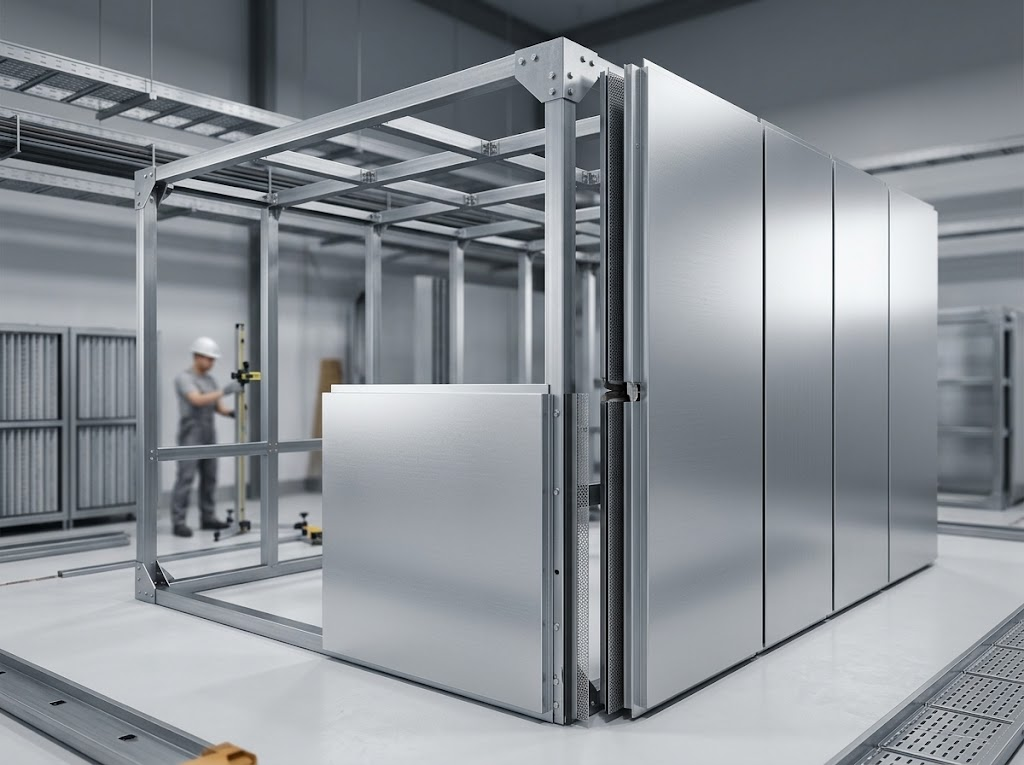
1. Self-Supporting Frame and Cold-Rolled Steel Modular Walls

1. Self-Supporting Frame and Cold-Rolled Steel Modular Walls

A suspended or self-supporting modular frame uses high-quality, double-sided hot-dip galvanized cold-rolled steel panels. The structure resists deformation over long service periods and maintains stable sealing and damping performance.

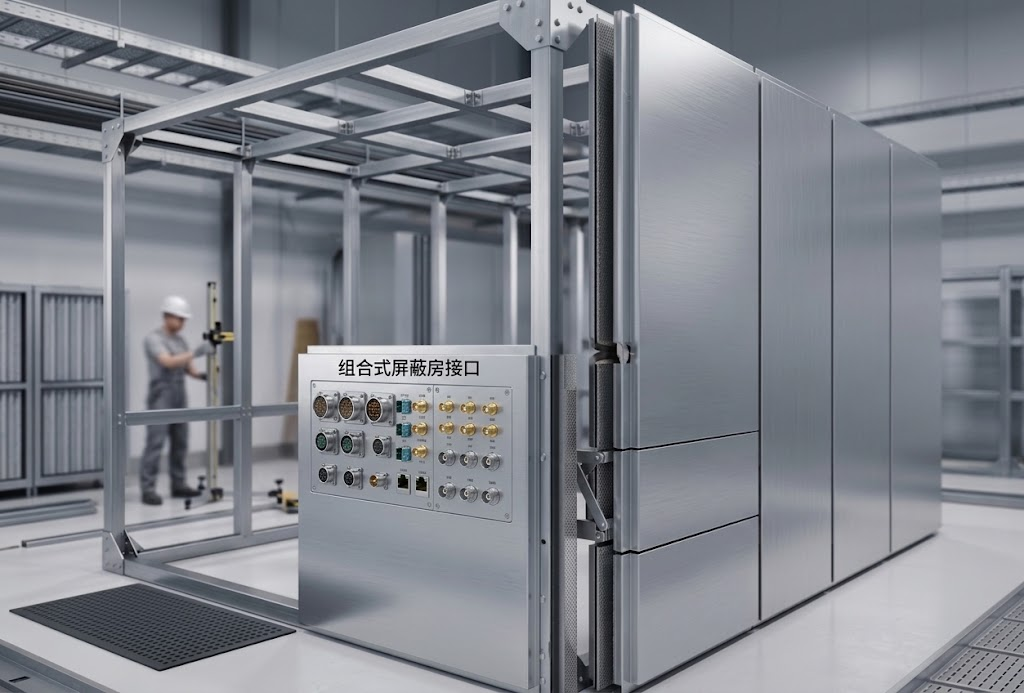
2. Configurable High-Integrity Filtered Interfaces

2. Configurable High-Integrity Filtered Interfaces

High-performance fiber-optic waveguides, HVAC waveguide panels and a full range of high-power power/signal filters allow services to enter the room without compromising RF isolation.

3. Multiple Door Mechanisms with Anti-Pinch Protection

3. Multiple Door Mechanisms with Anti-Pinch Protection

Imported high-elasticity beryllium-copper fingers mate with precision dual knife edges around the door. Testing through up to 50,000 operating cycles helps prevent the high-frequency leakage common at moving seams.

3D Breakdown of an Electromagnetic Shielded Room

Hover over the model hotspots and compare the engineering notes on both sides to explore critical construction details.

Engineering Detail IElectromagnetic continuity at moving seals and waveguide-below-cutoff ventilationMoving Seal / Waveguide Below Cutoff

1. Dual Knife-Edge Door with Two Rows of Beryllium-Copper Fingers

The shielded door is the moving opening most prone to RF leakage. Precision dual knife edges and conductive beryllium-copper fingers maintain low-resistance contact across a wide frequency range.
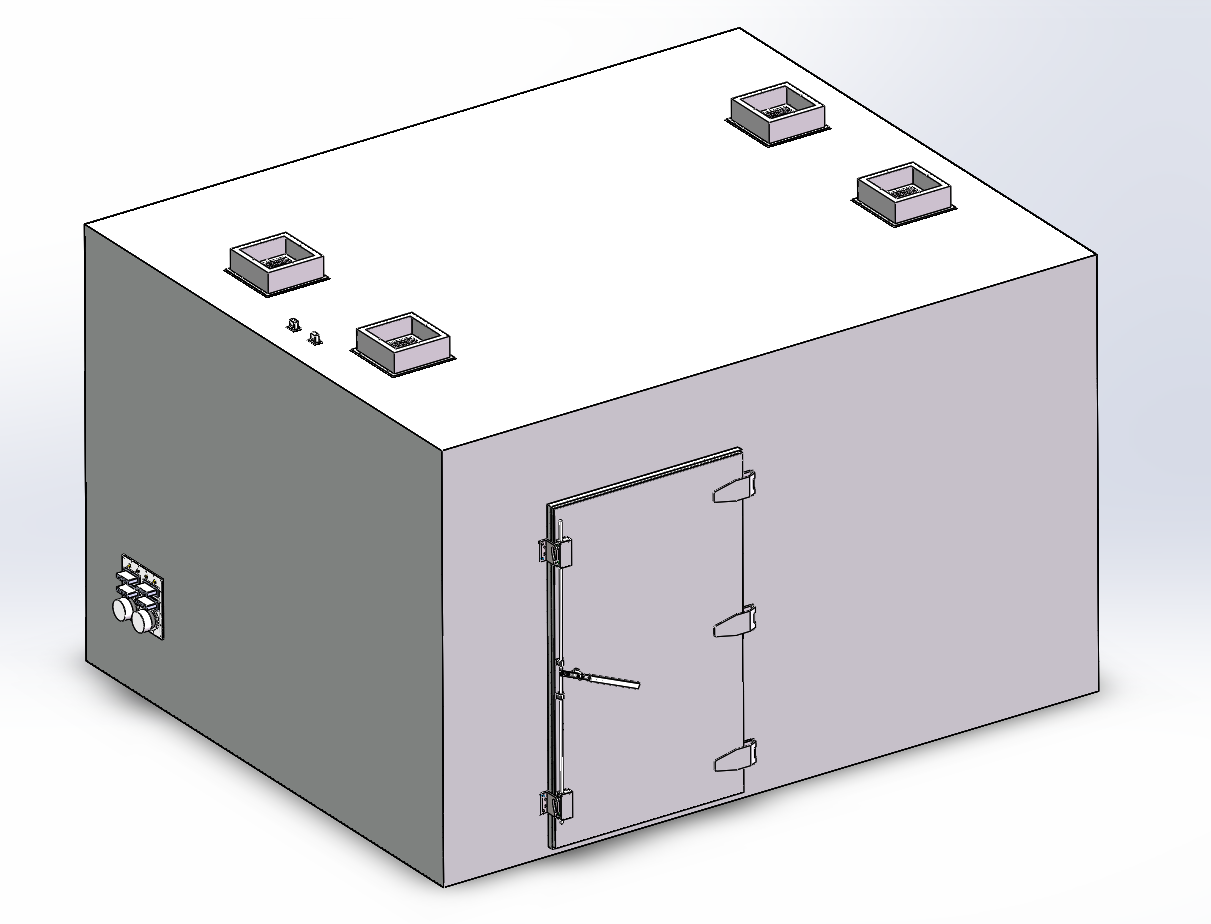
2. High-Attenuation Honeycomb Ventilation Panel

The honeycomb waveguide panel provides airflow and heat removal while exponentially attenuating electromagnetic waves below its cutoff frequency.

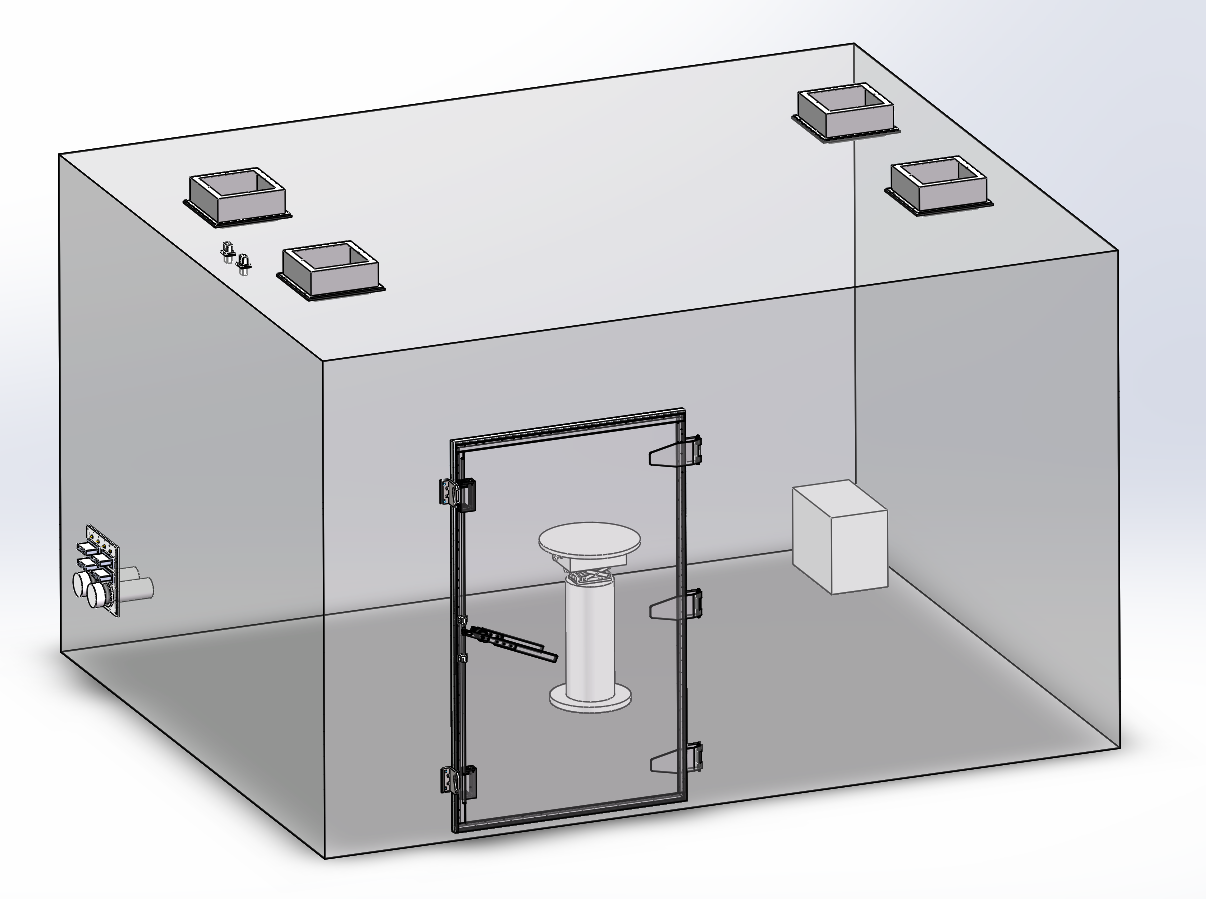
Engineering Detail IIDecoupled utility penetrations and distribution of the internal quiet zoneConducted Decoupling / Low-Reflection Test Zone

1. Centralized Wall Interface and Filter Decoupling

A centralized filter panel forms the only physical entry for power and signals. High-power low-pass filters and fiber-optic waveguides interrupt conducted electrical paths between the room and the outside environment.

2. Low-Dielectric Elevating Turntable and Quiet-Zone Alignment

The central elevating turntable uses low-permittivity materials with continuous height and rotation adjustment to position the device under test at the center of the quiet zone.

Core Shielding and EMC Chamber Systems

High-performance test environments engineered for research, certification and production.

Modular High-Performance Electromagnetic Shielded Room

Modular High-Performance Electromagnetic Shielded Room

A cost-effective choice for secure computer rooms, MRI shielding and general electromagnetic pre-compliance laboratories. Modular construction simplifies disassembly, relocation and future expansion.

  • Shielding effectiveness: >80–100 dB from 10 kHz to 18 GHz
  • Insulation resistance: ≥2 MΩ between the shielding shell and the building ground grid
  • Options: custom waveguide ventilation, antistatic composite flooring and specialized lighting
  • Filter components: high-attenuation honeycomb waveguide ventilation panels
  • Door design: dual knife edges with two rows of beryllium-copper contact fingers
Request a Shielded-Room Proposal
Standards-Compliant EMC Anechoic Chamber

Standards-Compliant EMC Anechoic Chamber

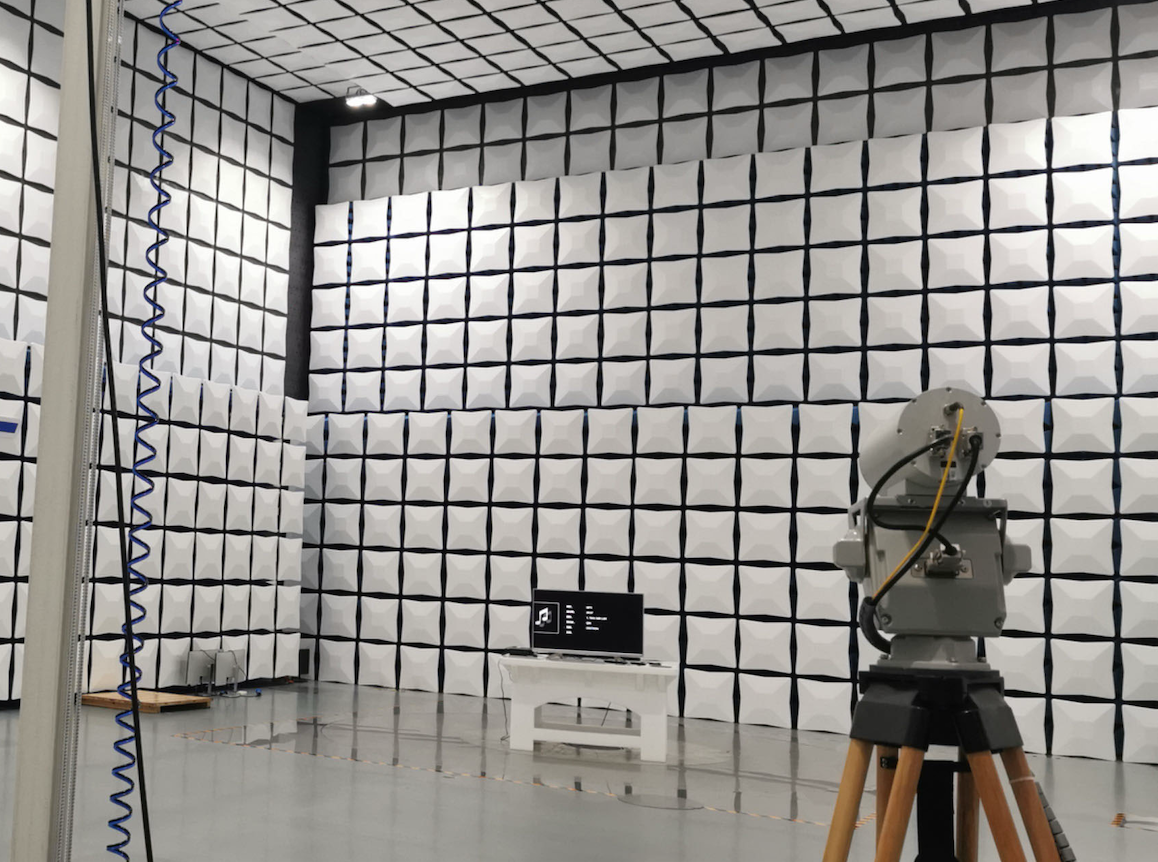
Designed for third-party certification testing. High-performance ferrite tiles and polymer pyramidal absorbers cover the interior to suppress RF reflections.

  • Standards: supports ANSI C63.4, EN 50147, CISPR 16/22 and other international requirements
  • Quiet-zone performance: controlled reflectivity and cross-polarization performance within the specified quiet zone
  • Integrated system: supports turntable, antenna mast, automated test software and dedicated industrial fire-system interlocks
  • Wideband capability: accurate RE and RS tests from 9 kHz to 40 GHz, with higher-frequency options
  • Low-loss interfaces: power/signal filter banks, fiber-optic waveguides and low-noise chamber lighting and monitoring
Request an EMC Chamber Proposal

End-to-End Engineering and Manufacturing for Dependable Laboratory Delivery

📐

Flexible Site-Specific Planning

We design around irregular sites, long-span rooms and demanding protection targets. Senior project engineers develop a practical layout and construction plan for each facility.

🛡️

Broadband Electromagnetic Protection

Selected shielding and absorber materials support requirements ranging from low-frequency conducted tests at 9 kHz to microwave and millimeter-wave radiated tests above 40 GHz.

🖥️

3D Simulation and Engineering Design

Our EMC chamber engineering team provides detailed 3D mechanical models together with electromagnetic-field, airflow-resistance and structural-stress analysis before construction.

Fast Engineering Response

A dedicated project engineer can begin requirements coordination quickly, with complete CAD/3D laboratory design documentation typically prepared within three days after the required site information is confirmed.

🏭

Direct Manufacturing Capability

In-house heavy welding, CNC panel fabrication and filter manufacturing provide direct control over quality, schedule and project cost.

🔬

Acceptance-Test Support

After completion, we support third-party testing of shielding effectiveness, site VSWR and field uniformity against the agreed CNAS, GJB or project acceptance criteria.

🤝

Lifecycle Service and Warranty

The main steel structure and shielding modules include a two-year warranty, backed by engineering service, software updates and long-term maintenance support.

Integrated Manufacturing Behind Every Delivery

An end-to-end system covering engineering simulation, machining, stamping and assembly reduces handoffs and unnecessary cost.

3D

Simulation Before Fabrication

Professional CAD/3D structural drawings and a design report are prepared before fabrication to validate the solution before tooling or construction begins.

100%

Full-Band Factory Verification

Specified shielded-room performance is verified before delivery and can be confirmed through third-party comparative measurements.

-30%

Direct Supply and Cost Control

In-house sheet-metal stamping and precision assembly keep the full process under direct control and eliminate trading-company markups.

5 Years

Long-Term System Support

Five-year system warranty and lifetime technical coordination support dependable long-term operation.

Submit Your Requirements and Request a Preliminary Engineering Layout